Tiny models, big impact
In the Stem Cell Core, human cell models help researchers study diseases and create personalized treatments to improve patient outcomes.
Foundation-funded researchers at the University of Alberta are growing three-dimensional, living models of human organs to help better understand diseases and conditions.
It’s happening in the Stem Cell Core, located in the Stollery Children’s Hospital Foundation Innovation Laboratories.
Last year, the Women and Children’s Health Research Institute(opens in a new tab) (WCHRI) launched the Stem Cell Core, giving researchers at the University of Alberta new ways to study diseases that affect kids and families.
Using human stem cells, researchers can grow three dimensional models of brains, spinal cords and placentas. These models more closely reflect human biology than traditional animal models, helping researchers better understand disease and test potential treatments. “Ultimately, a human is not a mouse,” says Dr. Anastassia Voronova, academic lead of the Stem Cell Core.
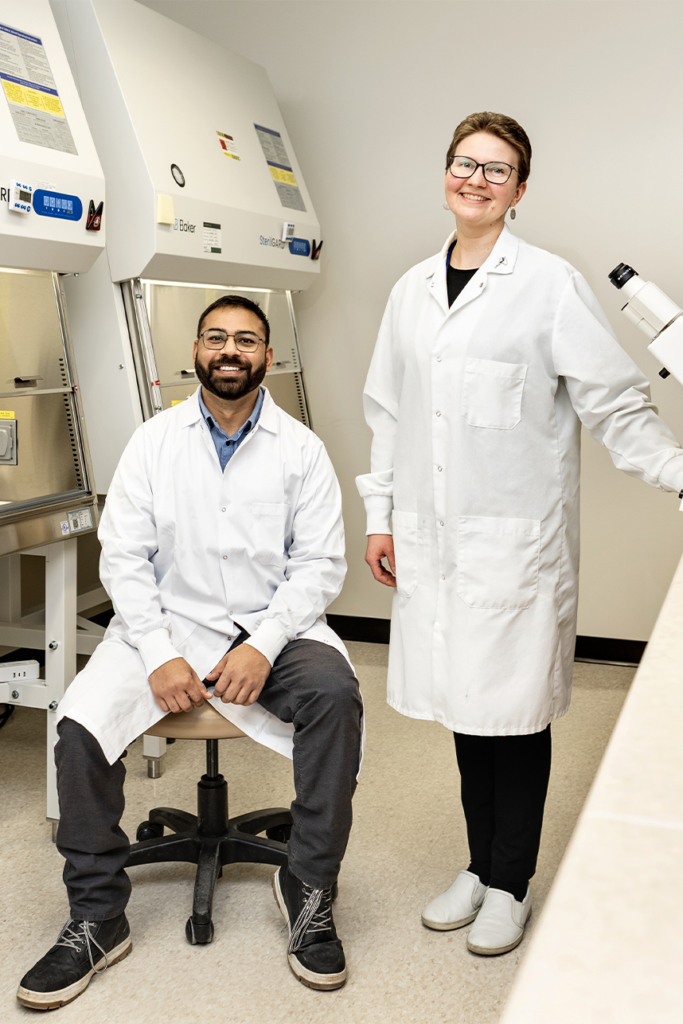
Voronova is collaborating with Dr. Meghan Riddell to study how placental health during pregnancy may influence brain development. They are combining placental and neural tube models to better understand how the two are connected.
For Dr. Sandeep Gupta, the technology is helping answer questions about early human development that couldn’t be explored before. Thanks in part to Foundation funding, Gupta joined the University of Alberta and the Stem Cell Core last year after being recruited from UCLA’s David Geffen School of Medicine. His team is using stem cell models grown from patients with autism spectrum disorder to better understand how early spinal cord development may contribute to autism
Together, these projects are helping researchers answer questions that couldn’t be answered before while advancing WCHRI’s work in precision health and more personalized care. As the Stem Cell Core grows, more researchers will have access to the training and technology they need to explore new questions. Thanks to your ongoing commitment to research, you’re helping fund lifesaving and life-changing projects, improving outcomes and changing the way care is delivered.
Published on